
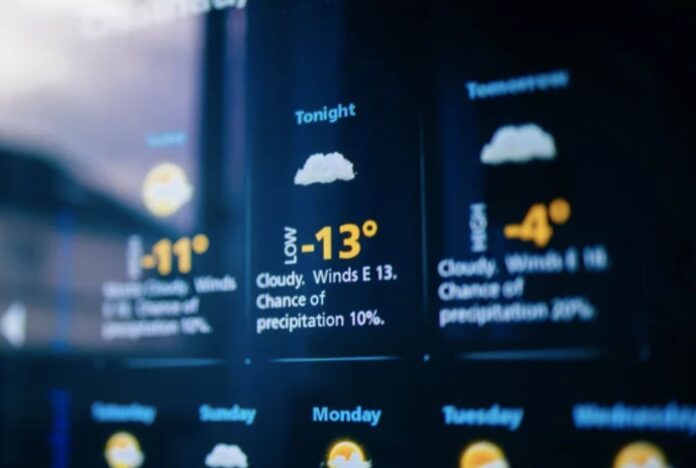
Sure, the minimum forecast is a number – the lowest temperature we’re expected to reach on any given date in history, and the maximum is the highest peak temperature for the day, so who then gets to decide what the “feels like” temperature is?
I don’t know about you but I’m picturing The Bureau of Meteorology employees meeting in the staff carpark the night before a forecast, dressed in an assortment of clothing layers, some shivering, some “not too bad” and others undecided, before they put it to a team vote and agree on the most popular number – But, maybe I’ve just watched too many Seinfeld episodes of late.
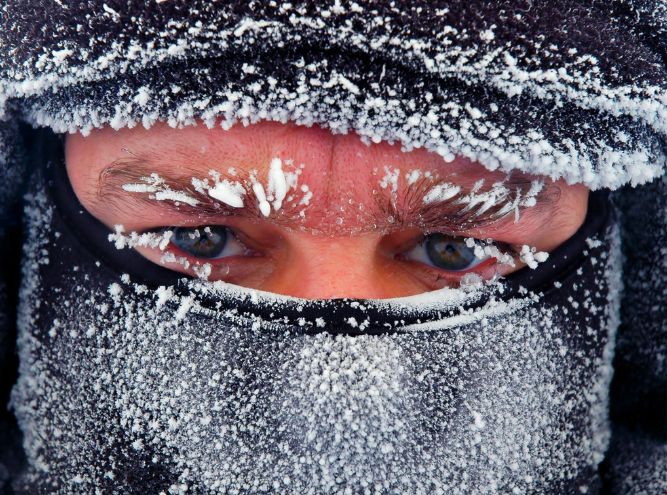
So, rather than come up with more theories (although I’d love to hear some of yours), I went digging and found the, let’s call it ‘the most sensible’ answer.
“People often comment that it’s a lot hotter or a lot colder than what the temperature or the observation is telling them and so The Bureau forecasts “Feels Like” temperature to help people get a better understanding of how they are going to feel when they get out there in the outdoors,” explains The Bureau of Meteorology senior meteorologist Jenny Sturrock.
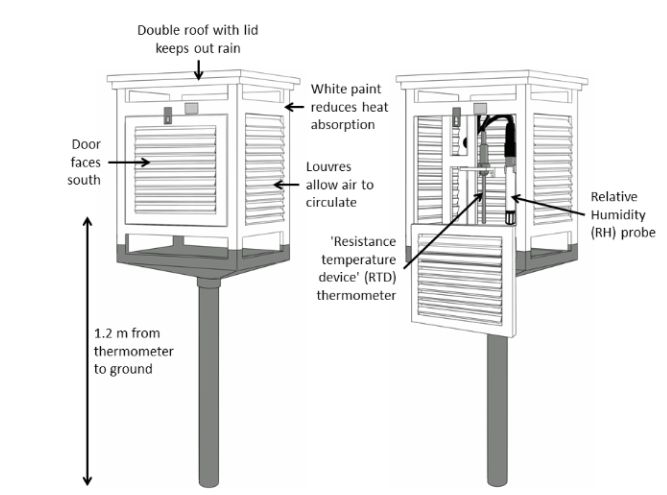
“Temperature is a recording of the air temperature from a thermometer inside one of our Stevenson screens.
“Feels like temperature on the other hand, that’s calculated to give people the understanding of what an average adult would feel, dressed for the season, in the outdoors.”
AT=Ta + 0.33xe-0.70xws-4.00 – is the formula for calculating the “feels like” temperature for the nerds among us.
Personally, I’m still struggling with the term “average adult”.
I’m not sure the “average adult” even exists.
We all have that one, self-proclaimed “cold frog” in our friendship groups. The one who needs thermal singlets, hiking socks, an electric blanket and a beanie before they leave the house on a 19-degree day.
And, we’ve all heard the theories about having thicker skin if you live nearer Tassie.
But, I digress.
“Our instruments measure ‘ambient temperature’—how warm the air is in the shade and sheltered from the wind,” says The Bureau’s explanatory notes.
“But by taking into account wind and humidity we also calculate ‘apparent temperature’—how warm you might feel.
“There can be a considerable difference between the two.”
There it is again – the “feels like” temperature.
Here’s an explanation, direct from our weather gods (aka The Bureau of Meteorology):
Wind chill
In the cooler months, particularly in alpine areas, the wind can make conditions feel much colder than the ambient temperature. You have a layer of warmer air around your body that can insulate you from cooler surrounding air; wind strips this layer away and allows you to feel more of the cold.
In alpine areas, the ambient temperature could be around –1 °C, for example, but the apparent temperature could be –15 °C.
Even closer to sea level, you might be walking your dog on a 22 °C day, so you don’t take a jumper, but the wind chill makes it feel like 15 °C—quite uncomfortable.
Humidity
At higher temperatures, wind chill is less significant and humidity plays a greater role in how warm you feel. In the tropics, there have been examples where the air temperature is 29 °C but it feels like 38 °C
When we are hot, our bodies sweat to cool us down. When there is a lot of moisture in the air, though, the rate at which sweat can evaporate from (and cool) the skin is reduced.
So if you are going to be working or playing outside and you know it’s hot, check the ‘feels like’ temperature and take measures to avoid heat stress.

Calculating the “feels like” temperature
We estimate what temperature it feels like using a mathematical model of an adult walking outdoors in the shade. The Steadman Apparent Temperature is defined as the temperature that (at a reference level of humidity and without wind) would produce the same level of discomfort in such an adult as the current combination of ambient temperature, humidity and wind chill.
The Steadman model does not include the effect of direct sunlight.
If you’re out in the midday sun in Australia, that can increase the apparent temperature by about 8 °C.
The Steadman model also assumes that the adult walking outside is ‘appropriately dressed’.
If your clothing is wet, for example, wind chill can be more severe and your chance of hypothermia would be greater than indicated by the apparent temperature.
For more related stories:
- Gallery: Newcastle Ocean Baths making waves
- Get outdoors and beat the blues
- Colds, flu, Covid – its a winter viral soup
Get all the latest Newcastle news, sport, real estate, entertainment, lifestyle and more delivered straight to your inbox with the Newcastle Weekly Daily Newsletter. Sign up here.



