
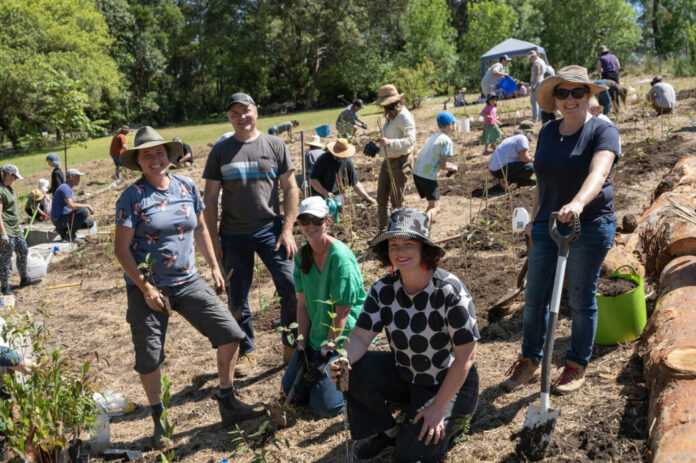
More than 100 volunteers joined forces to help save the planet from a plot in Cardiff Heights this week.
The group got its collective hands dirty planting 740 native trees in the Urban Hum Tiny Forest.
The patch of land in Newcastle is a small yet complete eco-system designed to provide habitat for native pollinators, wildlife and to mitigate the impacts of climate change.
Led by community group The Groundswell Collective, the tiny forest is aimed at promoting competition amongst trees resulting in accelerated growth.
“[The] tiny forests are a concept developed in the 1970’s by Japanese botanist Alika Miyawaki, which sees hundreds of native trees of various species planted densely in enriched soil,” says Groundswell Collective director Anna Noon.
“Dense planting promotes competition among the trees resulting in accelerated growth. This means we can rapidly regenerate the land up to 10 times faster than traditional tree planting methods.”
Tiny Forests have been used worldwide to attract greater biodiversity than conventional forests.
They are self-sufficient within just two to three years.
In urban areas where there is significant pressure on land for housing, tiny forests can be retrofitted into small, under-utilised spaces such as roundabouts, schoolyards, road edges or private backyards such as the Urban Hum project.
Once planted they assist in lowering temperatures, capturing carbon, reducing noise and air pollution, absorbing storm water runoff and supporting biodiversity.
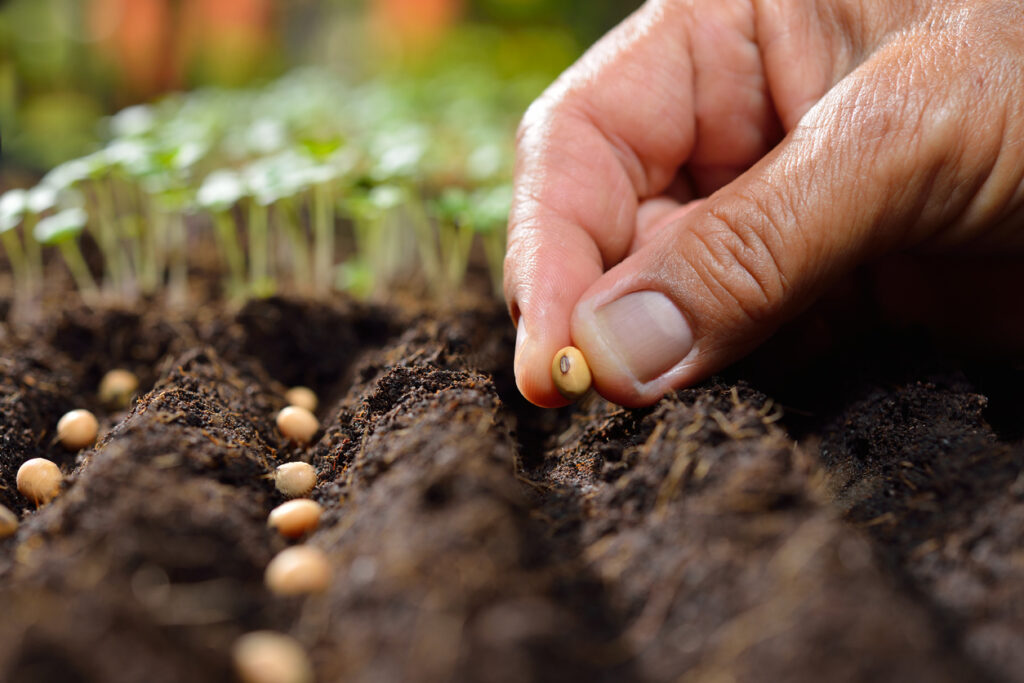
The Urban Hum Tiny Forest project has a particular focus on supporting native pollinators following the recent outbreak of Varroa mite.
“We were approached by Urban Hum beekeeping company owners Anna Scobie and Kelly-Ann Lees who were concerned that following the attempted containment of Varroa mite whereby our local European Honeybees were euthanised, more needed to be done to support and provide habitat for native pollinators,” said Ms Noon.
“Since the start of the project, the Department of Primary Industries (DPI) has announced its transitioning its Varroa mite response to ‘management’ but the impact here in the Hunter has already been felt.”
The Urban Hum Tiny Forest will be open to the public for workshops and gatherings.
“We’ll be collecting citizen science data within the forest both on the success of the tiny forest planting method and on native bees.” says tiny forest landowner and apiarist Kelly-Ann Lees.
“We were impressed by the work The Groundswell Collective team were doing partnering with a range of landholders and businesses.
“They are demonstrating that there are realistic actions that individuals, companies, and communities can take to make a positive impact on our planet.
“Giving people ways to activity engage in inspirational projects was something we were keen to be a part of. It’s been such an incredible experience.”
For more stories like this:
- What’s On in and around Newcastle
- Restored 1870s Morpeth homestead hits the market
- Matt Hall – inside the mind of a champion
Get all the latest Newcastle news, sport, real estate, entertainment, lifestyle and more delivered straight to your inbox with the Newcastle Weekly Daily Newsletter. Sign up here.



